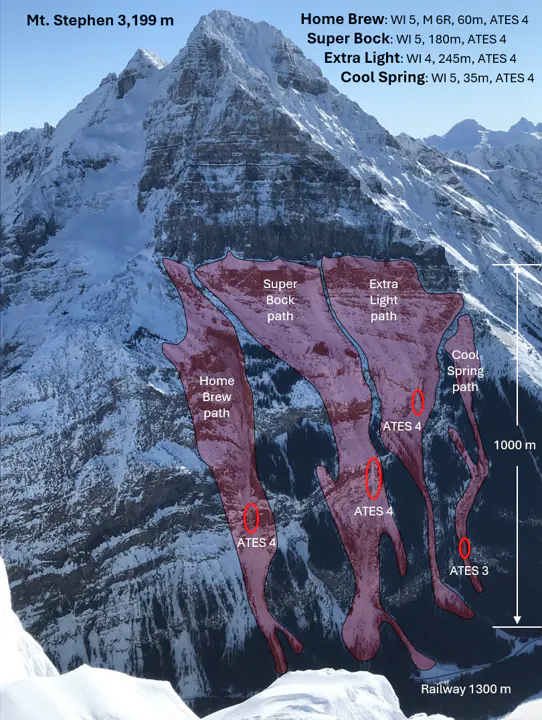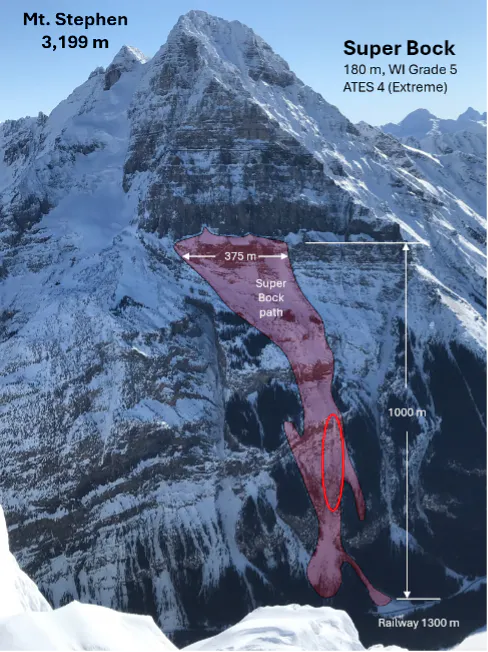
Super Bock is a classic 3–4 pitch WI5 climb featuring a unique Grade 3 opening pitch that climbs under a rock arch. The final tier often delivers challenging grade 5 climbing.
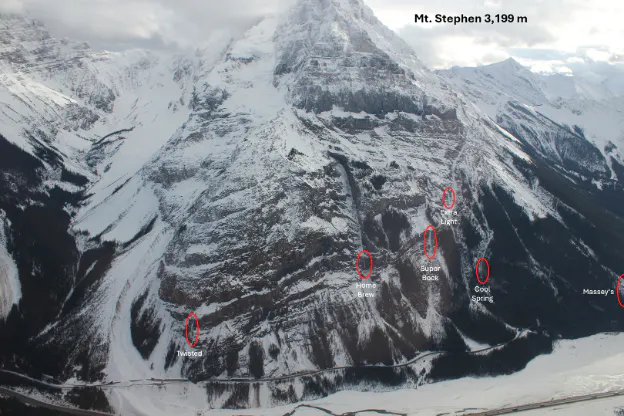
The route sits within the Super Bock drainage on Mt. Stephen, where several classic and newer mixed climbs are also found. The avalanche path above the route is a regular performer and frequently runs over the climb multiple times each winter.
Popularity
- 52 people completed the survey
- 46% climbed it once
- 46% climbed it 2–5 times
- 8% climbed it more than 6 times
Avalanche Frequency
- 53% always observed debris
- 22% observed debris more than half the time
- 10% observed debris less than half the time
- 15% have never seen debris
Avalanche Debris Distribution
- 86% observed debris on the approach
- 28% at the base of the climb
- 42% between middle pitches
- 2% above the final pitch
Key Observations
- Full-path avalanches frequently run to the railway tracks
- Debris depths of 30 cm to 4 m have been reported
- Debris can bury the first (WI3) pitch
- Old debris is commonly encountered between pitches
- Runouts can extend up to 400 m, including side fans
Avalanche Triggers
- 95% natural
- 5% human-triggered
Start Zones
- 65% started well above the climb
- 6% started directly above
- 30% unknown
Contributing Factors in Order of Significance
- 65% new snow
- 53% wind
- 47% warming / solar radiation
- 6% rockfall
Reported Avalanches and Incidents
- Large avalanches have been observed from afar during control work, originating well above the route and engulfing much of the runout.
- A sluff from the cliffs left of the route buried climbers to waist depth at the base of the first pitch
- Wind loading, storm cycles, and solar input regularly produce avalanche activity in the start zones above
- Spindrift avalanches consisting of loose faceted snow are common
Additional Notes from the Community
- Frequent natural avalanche activity has been observed off Mt. Stephen, often during storms or periods of strong wind. These can be seen from the highway.
- Avalanches from the side gullies and can impact the approach slope
- Wind slabs have caused parties to retreat from the approach slope
- Snow can accumulate in the gully even during dry periods
Access note: Best practice is to approach by crossing the river and avoiding travel along the railway tracks due to access restrictions from CPR.
Images